

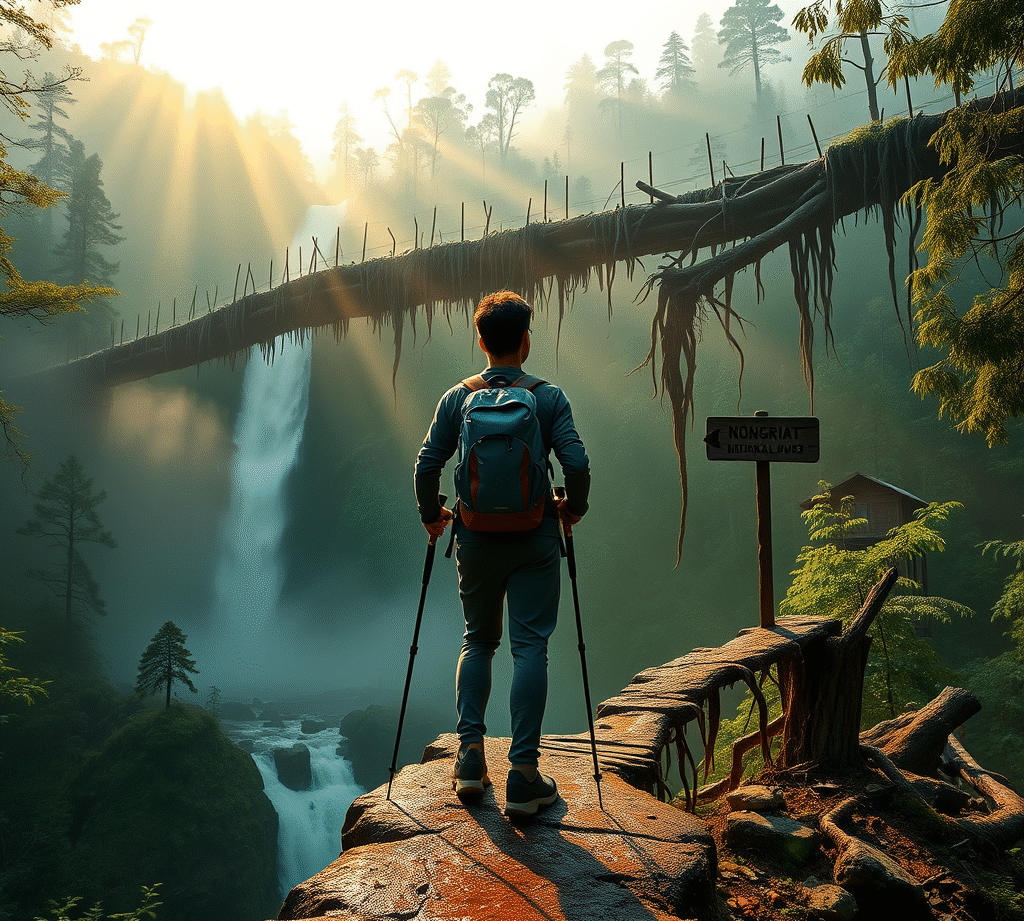
Nohkalikai Falls and Nongriat Root Bridge: A Trekker’s Guide
1. Why Nongriat & Nohkalikai Falls Matter
• Nohkalikai Falls – With a 3,173‑ft plunge, it ranks among India’s tallest free‑falling waterfalls.
• Nongriat – A quiet village only 10 km off the Bagh–Cachar rail line, hosting the world’s only double‑decker living‑root bridge.
• Adventure + Culture – It’s a trekker’s jackpot and a living testament to Khasi ingenuity.
Both sites showcase Meghalaya’s mist‑laden cloud forests and the resourceful spirit of its people. Whether you’re chasing adrenaline or soaking in tradition, this is a moment that sticks with you.
2. Getting There – Entry Fees & Logistics
| Item | Detail | Updated (2024) |
|---|---|---|
| Entry to Nohkalikai Falls 20 ₹ adults | 25 ₹ | |
| Camera Permit 50 ₹ (includes “camera fee”) | 70 ₹ | |
| Road Access 1.5 h walk from *Melody Residency* | Same as 2018 | |
| Tenders & permits None for the trek to Nongriat | Keep local info handy | |
| Best Time to Visit Sunrise (5:30 am) | 5:00–5:30 am (depends on season) |
**Tip:** Carry small change in ₹5/10/20 for guide tips, snacks, or any last‑minute quick buys.
**Update Note:** Fees change only a little; double‑check the Meghalaya Tourism website before you go.
3. What You’ll Need – Gear Checklist
| Category | Must‑Have | Optional |
|---|---|---|
| Footwear | Light hiking boots, ankle support | Waterproof socks |
| Poles | Trekking poles (foldable) | |
| Backpack | 20‑25 L with rain cover | Hydration bladder |
| Water & Food | 2‑3 L water, protein bars, dried fruits | Local dhaba meal |
| Clothing | Layered cotton; windbreaker | Sun hat, sunglasses |
| Camera & Accessories | Camera, extra batteries, strap | Gimbal, ND filter |
| Navigation | Printed map / compass, local signage notes | Smartphone GPS (offline map) |
| Health | First aid kit, blister treatment | Altitude‑sickness meds |
**Why trekking poles?** The trail’s loose rocks and uneven wooden posts make your knees work overtime. Poles keep you balanced, especially after a few falls—my own story is a testament (see Safety).
4. The Trek – Two Routes, One Epic Destination
**You have two clear paths to reach the double‑decker bridge; each shapes the pace, risk, and memory of the trip.**
4.1. Tyrna Trail – Safer, Scenic
– Start – From *Tyrna viewpoint*.
– Trail – Roughly 9½ km one way; you’ll probably finish around midnight if you walk all day.
– Terrain – Well‑marked, narrow, forest‑floor walk with few steep climbs.
– Highlights – A leisurely “waterfall trail” break—great for a quick photo and a snack.
– Pros – No vertigo, fresh air, early finish before sunset.
– Cons – Longer journey, miss the dramatic “off‑trail” drop of the falls.
**Local Advice:** If you’re staying overnight, dodge the waterfall trail—it’s riskier and doesn’t earn the collaborative finish line.
4.2. Nohkalikai Falls Trail – Dare‑Or-Not
– Start – At the base of *Nohkalikai Falls*.
– Trail – About 8 km; roughly 5½ hrs to the bridge.
– Terrain – Steep, slick rock, muddy stretches, and spots that Google Maps misses.
– Signals – Painted fence, wooden posts, stone markers, plus the “Nongriat” sign pointing downhill.
– Pros – A full‑on, adrenaline‑charged forest walk.
– Cons – Requires confidence, good gear, and an early dawn beginning.
**Why it rocks:** The waterfall’s own drop makes footing treacherous. Many trekkers have “fell multiple times,” but a solid camera strap saved a head or two (see Safety).
5. Root‑Bridge Construction & Cultural Significance
– How it’s built – Rubber‑tree roots weave through betel‑tree trunks, arching over the torrent.
– Double‑decker logic – When water rises, villagers add an upper deck of extra roots, letting hikers cross even as the river swells.
– Engineering marvel – Roots flex, stretch, and strengthen over years—nature’s own load‑bearing structure.
– Cultural backdrop – The bridge keeps villagers connected for trade, rituals, and daily life. It’s a living community asset, not just a tourist spot.
– Visitor etiquette – Keep feet clean, avoid stepping on roots, and follow locals’ guidance.
**Local wisdom**: “The bridge is part of the village, a living extension of our forest.” – Nongriat guide
6. Safety & Practical Tips
| # | Lesson |
|---|---|
| 1 | Get up before dawn – Aim for 3:30 am to avoid heat and darkness. |
| 2 | Poles are your best friend – Balance on loose stones and protect your knees. |
| 3 | Carry a spare camera strap – It’s a safety net against hobbles and splinters. |
| 4 | Don’t pause on the path – If you need a break, slip into a corner. |
| 5 | Knee support matters – A simple brace can prevent blisters from turning into blisters‑and‑mobility‑problems. |
| 6 | Follow local signposts – “Nohkalikai Falls” can mislead; trust the “Nongriat” arrow. |
| 7 | Pack rain‑proof gear – Shillong’s showers can arrive unexpectedly. |
| 8 | Respect the environment – Roots and flowers are part of the cultural heritage; don’t touch or cut. |
**Storytime** – I once slipped on a slick rock; a camera strap lifted my head clear of a nearby root! Simple gear saved the day.
7. Accommodation – Stay Under the Stars in Nongriat
– Homestays – Most travelers rent tents or guesthouses. Book early—holidays fill up fast.
– Tent offers – Some homestan hosts give free tents as part of their hospitality system.
– The Elephant Shelter – A remote forest hut offering basic bedding and shared meals for the thrifty.
– Get authentic – Spending a night with villagers gives you a front‑row seat to local life and bolsters the local economy.
**My 2024 experience** – All guesthouses were booked; a free tent was my only option. I slept beneath silver‑leaf pines, with only the river’s hush as lullaby.
8. Planning Your Trip – A Day‑in‑the‑Life Itinerary
| Time | Activity | Highlights |
|---|---|---|
| 03:30 am | Walk from Melody Residency to the Falls entrance | Beat traffic, catch early light |
| 04:00 am | Pay 25 ₹ entrance & 70 ₹ camera permit | |
| 04:30 am | 1.5 hr climb to the Falls viewpoint | First sunrise over a 3,173‑ft drop |
| 06:00 am | Breakfast at the south‑side dhaba | Try the local “Ahuna” rice bowl |
| 07:00 am | Begin chosen trail | Keep a map of the “Nongriat” sign |
| 10:30 am | Reach the first root‑bridge (single‑deck) | Quick photo stop |
| 12:00 pm | Snack break: fresh herbs & coconut | 200 ₹ per person |
| 02:00 pm | Cross the double‑decker bridge | Helmets optional but wise |
| 03:30 pm | Check into Nongriat village, set up tent | Sunset view |
| 04:30 pm | Start descent or return to the Falls base | Lighten your load before dark |
| 06:30 pm | Finish trend, hang out with locals | Folk music, shared stories |
**Rainy‑month tweak** – Shorten the route; switch to an upper path near the falls for a gentler feel.
9. Beyond the Bridge – What Else to Explore
– Orang’s Holes – Natural reservoirs that look like giant glass bottles.
– Mawphlang Tea Plantations – A quieter trek, fragrant air, and a taste of Khasi tea culture.
– Kohom’s Viaduct – A glass walkway giving a different spine‑trembling view of Kundadhoo Creek.
– Bechao Windmill – A record‑holding iron windmill at the valley’s peak offers a historical detour.
**Tech tip** – Pack a portable charger; smartphone batteries can drain by 4 pm.
10. Final Thoughts & Call‑to‑Action
– Preparation saves the day – Early starts, sturdy poles, and a trusty camera strap are your essentials.
– Treat the land with care – Roots are the village’s living spine; mess up and you hurt more than just yourself.
– Share the story – If you’re a chronicler of journeys, this place deserves a chapter.
– Reserve early – Both tents and guesthouses snap up by midsummer.
Craving more insider insights? Subscribe to our Meghalaya Trailblazer newsletter for weekly updates on gear, local prospects, and off‑market adventures.
Ready to print this experience to the map? Click now to book a homestay, order gear, or start drafting your next trek plan.
Quick FAQ
| Question | Answer |
|---|---|
| Is the double‑decker bridge open year‑round? | Yes, except during heavy monsoon when safety obliges closure. |
| Do I need an online reservation? | Not for entry, but booking a tent or guesthouse early is wise. |
| Best season? | March–May for lower humidity; Dec–Feb for clearer views. |
| Can I bring a goat or small animal? | No—local conservation rules forbid non‑native animals. |
| Do locals speak English? | Some do, but only around half‑the‑villagers; a phrase list helps. |
Image Alt Text Ideas
– “Sunrise over Nohkalikai Falls, the jagged plunge visible in soft morning light.”
– “Trekking poles set beside a damp, leaf‑filled path near the falls.”
– “The double‑decker living‑root bridge: lower deck of betel‑tree trunks, upper deck of rubber‑tree roots.”
– “Tent roof tucked beneath a canopy of silver‑leaf pines inside Nongriat.”
End of Guide.
*Drop a comment if you’ve trekked this trail or plan to – let’s build a real‑time community of off‑grid adventurers.*