

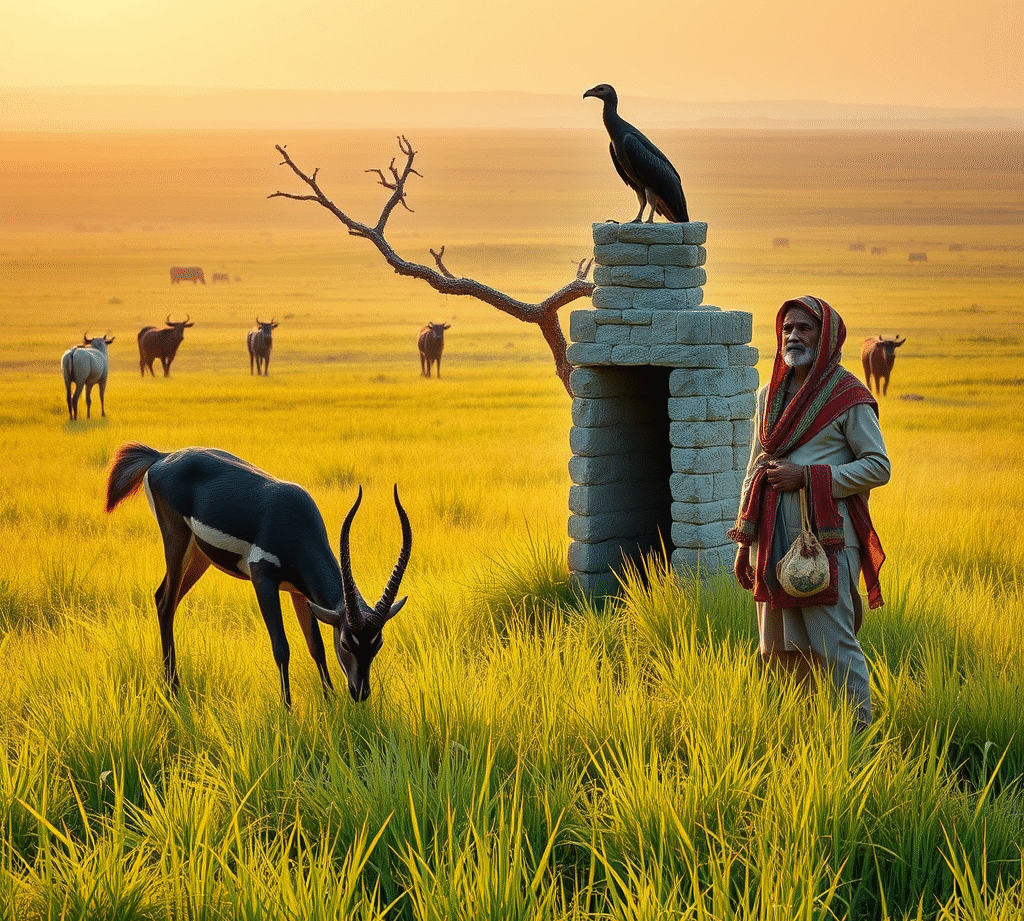
Grassland Paradox: Biodiversity & Livelihood Engine
1. The Grassland Paradox – A Hidden Engine of Biodiversity & Livelihood
| Why Grasslands Matter | Key Numbers |
|---|---|
| Species Reservoir 56 wildlife species protected under the Wildlife Protection Act call grasslands their home. | |
| Food Source for Livestock A 2006 Task Force report found that 50 % of the fodder for >500 million animals comes from India’s natural grasslands. | |
| Tourism Blind‑Spot Most travel guides gush about tigers, elephants, and waterfalls; grasslands are rarely mentioned. |
Grasslands are not simple open stretches of lawn – they cover almost 40 % of India’s land and sit at the crossroads between our farms and wild spaces. They:
House the Black Buck (Aepyceros melampus) that roams Tal Chhapar.
Nurture vultures—cinereous, Egyptian, and griffon—roosting at Jorbeer.
Support swarms of pollinators and bird species such as Sherbet‑winged Swifts and Jerdon’s Courser that keep ecosystems humming.
The “Un‑advertised” Threats
Semi‑permanent livestock herds over‑grazing the grasses.
Invasive plants like Prosopis juliflora crowding out native species.
Climate change intensifying droughts that turn once lush plains into cracked, fragile habitats.
2. Community Conservation: When Villagers Become the First Line of Defense
2.1 Tal Chhapar – The Black‑Buck Sanctuary
Location: Outer Bundi district, Rajasthan.
Community model: Villagers guard the night, blending traditional know‑how with modern vigilance.
Result: Black buck numbers have jumped 70 % since 2008.
Why it works: A pay‑for‑performance scheme rewards each harvested carcass to households, keeping the incentive real. State rangers conduct regular check‑ins, reinforcing the partnership.
2.2 Jorbeer – The Vulture Conservation Reserve
Goal: Save India’s three most threatened vultures.
Key measures: Removing diclofenac from livestock feeds via veterinary outreach. Building custom vulture nesting towers.
Impact: Vulture counts climb again, and farmers see a tangible eco‑livelihood benefit when these birds clear carcasses that could spread disease.
These villages offer a scalable blueprint: Empower local people, incentivise their work, and back it with law.
3. India’s Eco‑Tourism Map – What’s Already on Offer
> 28+ iconic destinations across 22 states have UNESCO listings, state wildlife acts, or national park charters.
| Region | Highlight | Eco‑Tourism Feature |
|---|---|---|
| Himalayan Peaks | Rishikesh, Manali, Ladakh | Mountain trekking + spiritual retreats |
| North & Central India | Rann of Kutch, Thar Desert | Camel safaris + sunset light festivals |
| South‑West | Ranthambore, Bandhavgarh | Tiger‑tracking camps |
| East Coast | Sundarbans | Mangrove boat safaris |
| Backwaters | Kerala, Tamil Nadu | Houseboat stays & community tours |
Gap Analysis – Grasslands
Grasslands never appear as a distinct attraction in these catalogues. The untapped potential lies in “Grassland & Vulture Safaris” that showcase places like Tal Chhapar and Jorbeer.
4. The 72‑Hour Urban‑Survival Experiment – Lessons on “Deep‑Ecology” vs Reality
| Element | Observation | Take‑away |
|---|---|---|
| Participants | 8 urban “survivors” from Delhi, Lucknow, Noida, etc. | Most carried a “deep‑ecology façade”; 71 % admitted comfort remained in sight. |
| Key Skills Taught | Rope‑making, fire‑making, animal tracking, knot‑tied hunting | The real test came from dehydration and food scarcity, not the technicalities. |
| Tiger Encounter | A murmur of tracks led to a *tiger sighting* on a ridge | Marketing often turns these moments into spectacle, masking real threats. |
| Outcome | Participants bought “foraging knowledge”, not just adrenaline | True learning demands letting go of comfort and seeing wildlife as living, not props. |
What the Experiment Reveals
1. Experience‑based tourism alone isn’t enough if it stays in luxury mode.
2. Authenticity surfaces when visitors trade comfort for honest interaction.
3. Shifting the narrative—from “glamorous tiger track” to “survival story”—can reshape public perception.
5. Putting It All Together – A Call for Integrated Conservation & Tourism
5.1 Policy & Program Design
| Need | Suggested Action |
|---|---|
| Community incentives | Match‑fund for local guarding; wage‑supplement for grassland stewards. |
| Grassland protection | Safeguard all “grassland guilds” under the Wildlife Protection Act—extend protection beyond tiger‑centric sites. |
| Fodder‑income | Create “grassland stewardship credits” that link livestock owners to biodiversity outcomes. |
5.2 Eco‑Tourism Marketing
| Issue | Fix |
|---|---|
| “Tiger‑centric” Narrative | Launch a Grassland‑Story Campaign featuring black‑bucks and vultures through immersive photo essays. |
| Logistics & Accessibility | Partner with local transport co‑ops to offer eco‑friendly options (bike‑carvings, community buses). |
5.3 Education & Experiential Learning
| Target | Tool |
|---|---|
| Urban Youth | Interactive 5‑day “Grassland Conservation Bootcamp”—walking tours, restoration workshops, oral‑history projects. |
| Universities | Internship modules on *integrated livestock‑biodiversity footprints*. |
| NGOs | Co‑write “Grassland Impact Reports” with government statistics. |
5.4 Communication & Storytelling
– Flip the tiger‑track trope: “Every trail without a tiger is a path that leads to ecological resilience.”
– Post regular IG stories on vulture rehabilitation and black‑buck recovery.
– Offer virtual reality tours of Jorbeer and Tal Chhapar to hook younger audiences.
6. Actionable Checklist for Readers
| Who? | What? | Next Step |
|---|---|---|
| **Policy Makers** | 1. Amend wildlife legislation to include grasslands. 2. Offer tax incentives to grassland maintainers. | Draft a *Grassland Conservation Bill* (2024‑25). |
| **Tourism Boards** | 1. Create an “India’s Grasslands” package & marketing deck. | Contract with local NGOs for guided itineraries. |
| **NGOs** | 1. Train communities in vulture nest construction. 2. Start a citizen‑science data app. | Launch *“Vulture Watch”* mobile app. |
| **Citizens** | 1. Learn about grassland ecology. 2. Volunteer in restoration projects. | Sign up with *Eco‑Guards* list. |
| **Travelers** | 1. Choose sustainable Grassland Safaris. 2. Respect wildlife protocols. | Book through certified operators. |
7. Closing Thoughts – From Insights to Impact
India’s natural tapestry isn’t just a parade of tigers or Himalayan peaks. Its grasslands pulse beneath the plains, sustaining livestock economies, breathing life into rare vultures, and sequestering carbon. The stories of Tal Chhapar, Jorbeer, and Bandhabgarh show that real change surfaces when villagers protect their own lands and when urban explorers abandon the illusion of comfort for genuine ecological engagement.
Time to rewrite the travel guide: invite everyone—policy makers, NGOs, locals, travelers—to explore, safeguard, and celebrate the unseen gems that lie across India’s sun‑scorched plains.
Quick Index
• [Grassland Paradox](#1)
• [Community Wins](#2)
• [Eco‑Tourism Map](#3)
• [72‑Hour Survival Lesson](#4)
• [Integrated Action Plan](#5)
• [Reader Checklist](#6)
• [Final Call for Change](#7)
Images / Visuals to Include
1. Infographic – “India’s Grassland Footprint: Fodder, Fauna, and Tourism.”
2. Photo gallery – Tal Chhapar black‑buck at sunrise, Jorbeer griffon in wind, Bandhavgarh ranger training.
3. Map – Overlay of 28+ eco‑tourism sites plus 5–6 highlighted grassland zones.
4. Chart – 50 % livestock fodder source vs. alternatives by state.
Internal Linking Strategy
– Link to a dedicated post on Grassland‑Based Livestock Management.
– Insert a profile of a Bandhabgarh survival guide as a long‑form piece.
– Connect to a page about Common Threats to India’s Vulture Populations.
SEO & User Experience Tweaks
1. Keyword Placement – “India grasslands”, “community conservation India”, “Tal Chhapar black buck”, “Jorbeer vulture reserve”, “Bandhabgarh survival camp.”
2. Meta Titles & Descriptions – Ensure each page uses a unique blend of primary and secondary keywords.
3. Backlink Audit – Target environmental NGOs, wildlife ministries, and travel bloggers for guest posts.
4. Schema Markup – Add localBusiness, Product (eco‑tour packages), and Article schemas.
5. Storytelling Video – Embed a 4‑minute documentary to raise dwell‑time and shareability.