

India’s Green Awakening: Inclusive Ecotourism & Tea Gardens
India, a land buzzing with unparalleled biodiversity and ancient wisdom, is truly leading the charge towards a greener, more sustainable future. From the majestic Himalayas to the sun-kissed Western Ghats, two powerful stories are unfolding: one about transforming ecotourism into something truly “inclusive,” and another about how India’s famous tea gardens are becoming shining examples of sustainable farming. It’s a journey built on harmony, empowering local communities, and a deep respect for all life – a powerful model for the rest of the world to learn from.
Beyond the Big Cat Gaze: Redefining Ecotourism in India
Think about it: for too long, wildlife tourism has often been all about spotting the “big five.” But that focus often makes us miss the incredible, intricate web of life that truly makes an ecosystem sing. Now, India is bravely challenging that narrow view, championing a kind of ecotourism that welcomes everyone, feels truly ethical, and actually helps nature bounce back stronger.
The Pitfalls of “Pseudo Ecotourism”: A Critical Look
Let’s be honest: a lot of what gets called ‘ecotourism’ today – especially those tiger-focused photo safaris – can often feel like a bit of a trick, a “pseudo ecotourism” if you will. It’s often fueled by a desire among well-off travelers to “collect” experiences, and that can sadly lead to all sorts of questionable practices. We’re talking about focusing only on big, eye-catching animals while ignoring the rich tapestry of other life, putting too much strain on delicate protected spaces, and often forgetting about the well-being and long-held rights of local people. As critical writings, like “Pseudo Ecotourism in the Shadow of the Bengal Tiger,” point out, this kind of shallow tourism risks turning conservation into a show, instead of something that truly helps nature thrive long-term.
Embracing “Inclusive Ecotourism”: A Holistic Vision
So, what’s the answer to this “pseudo ecotourism”? It’s inclusive ecotourism, a game-changing way to connect with nature that redefines everything. This approach champions a core belief: valuing *all life*, not just humans. It pushes us past simply protecting a few species to really weave together human culture with profound ecological understanding. This model understands that real conservation shines brightest when local communities aren’t just involved, but are active partners and truly benefit from it. Their traditional wisdom, after all, is priceless for keeping nature in balance.
Indigenous Wisdom: India’s Original Conservationists
For centuries, indigenous communities all over India have actually lived out the very ideas of inclusive ecotourism, simply by how they live every day. Their Traditional Ecological Knowledge (TEK) offers incredible lessons on how to live sustainably and in harmony with nature:
| Bishnoi (Western Thar Desert, Rajasthan): | Guided by Guru Jambheshwar’s 29 “Niyamas,” they’re famous for protecting plants and animals, even giving their lives for trees and blackbucks – a truly powerful commitment. |
| Dongria Kondh (Niyamgiri hills, Odisha): | They live by growing food and using shifting cultivation, and their strong stand against mining really shows just how deeply they connect spiritually to their land. |
| Apatani (Ziro Valley, Arunachal Pradesh): | They’re celebrated for their incredibly productive wet rice farming and sustainable social forestry, all done without modern machines or even farm animals. Their valley is so special, it’s a UNESCO World Heritage Site nominee for how wonderfully they preserve their ecology. |
These communities are living proof of a deep understanding of sustainability, showing us all that human culture and nature can absolutely thrive side-by-side.
Expanding Conservation’s Reach: The Power of OECMs
Inclusive ecotourism also really believes in something called Other Effective Area-Based Conservation Measures (OECMs). These are places outside our traditional protected parks, but they’re still managed in ways that achieve incredible results for biodiversity. OECMs are key because they help us see and bring in all kinds of different landscapes and communities into the bigger conservation picture, offering fresh new places to explore:
| Northeast India: | Imagine places like Buxa, Manas (a UNESCO World Heritage Site and Project Tiger reserve), Orang (a real stronghold for Indian rhinos), and Kaziranga (another UNESCO World Heritage Site, home to two-thirds of the world’s Indian rhinos) – these are fantastic examples, showing off rich biodiversity far beyond the usual tourist magnets. |
| “Wasteland” Transformation: | And then there’s the transformation of places once called “wastelands.” Think of Tal Chhapar Sanctuary (Churu, Rajasthan), famous for its blackbucks, and Desert National Park (Rajasthan), a sanctuary for the Great Indian Bustard and ancient fossils. They beautifully show how getting communities involved can turn forgotten areas into lively, thriving ecotourism spots. |
Diversifying the Lens: New Horizons for Nature Tourism
To ease the strain on those well-known, often crowded spots famous for big animals, inclusive ecotourism suggests we spread our attention. This opens up exciting new ways to appreciate the smaller, but just as important, parts of an ecosystem:
| Herpetofauna Exploration: | Take the Western Ghats, for instance. They offer an amazing chance for herpetofauna photography, letting us shift our gaze from tigers to the truly captivating world of reptiles and amphibians. Places like Munnar, Valparai, Parambikulam Tiger Reserve, Agumbe (with its lush rainforest and king cobras), Chorla Ghat, and Kodagu/Coorg practically invite you to dive deeper into the forest’s hidden corners. |
| Agroforestry as Attractions: | Even agroforestry farms, where trees and shrubs grow alongside crops, are becoming fascinating ecotourism spots themselves. They offer wonderful nature-based fun and learning experiences. |
Actionable Advice for the Conscious Traveler
So, if you’re keen to experience truly inclusive and sustainable ecotourism, here’s how you can make a difference:
- Look beyond the “Big Five”: Search for experiences that showcase all the amazing local biodiversity, from birds and insects to the plants that thrive there.
- Support local efforts: Pick places to stay and tour operators that are owned by locals, hire local people, and pour their earnings right back into the community.
- Get curious: Learn about the local indigenous cultures and the conservation hurdles they face in the region you’re visiting.
- Tread lightly: Follow “leave no trace” principles, respect all wildlife viewing rules, and absolutely steer clear of any animal interactions that feel wrong or exploitative.
- Ask questions: If an experience promises guaranteed animal sightings or puts photo ops above an animal’s well-being, take a moment to be skeptical. Your gut feeling matters.
The Green Gold Standard: India’s Sustainable Tea Gardens
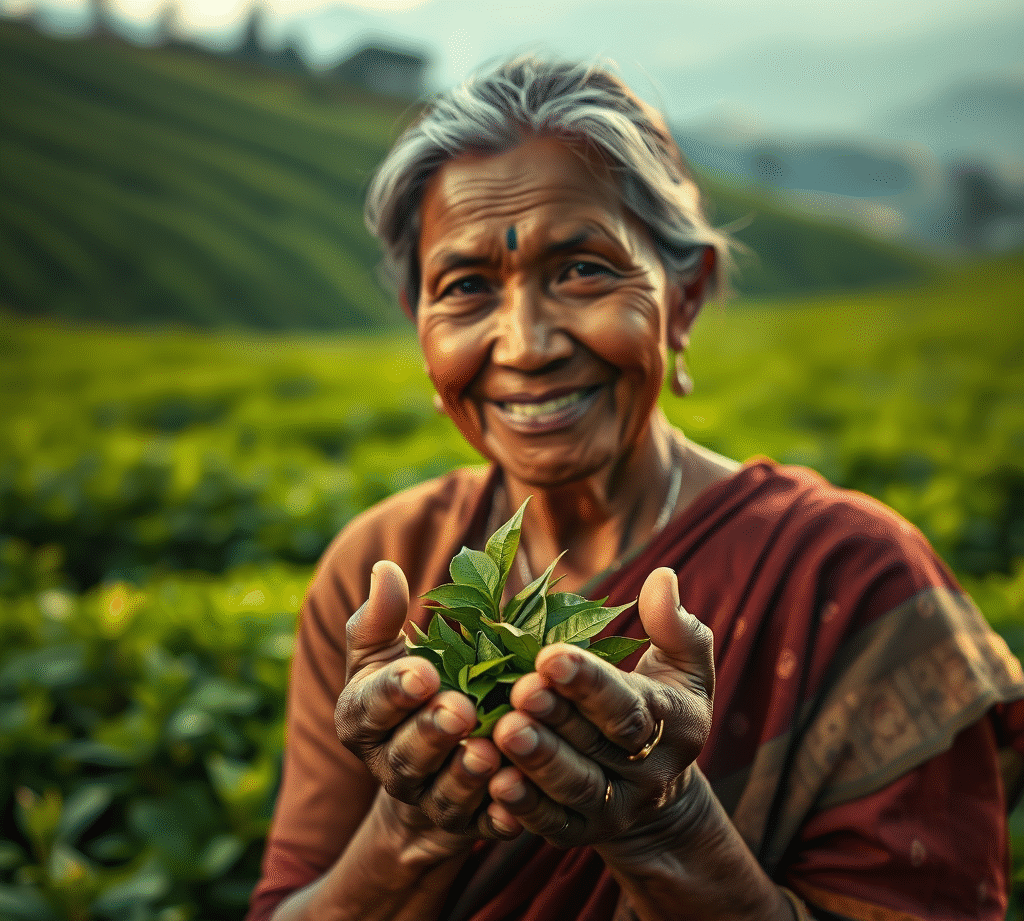
Beyond the wild forests, India’s peaceful tea gardens tell another captivating story of sustainability, beautifully blending natural beauty with human cleverness. These green, rolling landscapes are so much more than just farms. They’re vibrant ecosystems, treasuries of culture, and powerful drivers of local well-being and progress.
More Than a Beverage: Tea Gardens as Living Ecosystems
India’s tea gardens are truly living, breathing cultural landscapes where nature’s delicate balance meets the gentle touch of human care. They support millions of lives, protect invaluable heritage, and are actively growing tea in ways that truly respect the environment. They matter in so many ways:
- Ecological: They keep the land green, support all sorts of biodiversity (often serving as vital pathways for wildlife), and nourish the soil.
- Economic: The industry gives work to millions, particularly women, offering stable ways to earn a living in rural communities.
- Cultural: Growing tea is woven deep into the identity and traditions of many regions.
Iconic Regions & Their Distinct Flavors
India is home to some of the world’s most famous tea-growing regions. Each one has its own special personality and a genuine commitment to sustainability:
| Assam: | The Brahmaputra Valley holds the world’s largest continuous tea area, known for its strong, malty teas (like those from Jorhat and Halmari estates) that keep rural economies thriving all year. |
| Darjeeling: | Nestled high in the Eastern Himalayas (600-2000m altitude), this region crafts exquisite, lighter, aromatic “muscatel” teas (think Makaibari, Glenburn). These gardens are true pioneers in organic and sustainable practices. |
| Nilgiri (Tamil Nadu): | The “Blue Hills” enjoy a lovely equatorial climate, meaning they can pluck fragrant, brisk teas (like Chamraj) all year long – teas often perfect for iced drinks. |
| Other Notables: | Other places like Kangra Valley (Himachal Pradesh) are bringing back artisan green/oolong teas, and Dooars-Terai (West Bengal) is a big producer of CTC (Crush, Tear, Curl) teas. |
Brewing Innovation: Technology & Regenerative Practices
The Indian tea industry is enthusiastically embracing modern approaches and sustainability, truly setting standards for the world:
- Regenerative Agriculture: Estates such as Mugapara and Selim Hill are leading the way in regenerative farming, really focusing on healthy soil, capturing carbon, and boosting biodiversity. Happy Valley and Chamraj, for instance, actively turn pruned branches into compost and keep pesticide use to a minimum.
- Advanced Technology: AI is stepping in for super-accurate pest detection, and blockchain technology (you know, with QR codes) gives us amazing transparency and traceability from the garden right to your cup.
- Women’s Leadership: The industry is increasingly championing women, especially through cooperative models, which boosts both community well-being and the quality of the tea.
Community Welfare & Health Benefits: A Holistic Impact
The good things about the tea industry go far beyond just what’s in your cup:
- Socioeconomic Development: Tea gardens often pour resources into crucial education, healthcare, and housing projects for their workers and the surrounding communities, especially in far-flung areas.
- Health Benefits: And don’t forget the health benefits! Tea is packed with antioxidants like polyphenols and catechins, famous for helping your heart, digestion, and keeping your mind sharp. It’s a truly feel-good product.
Charting a Sustainable Future for India
India’s deep commitment to inclusive ecotourism and sustainable tea growing paints a powerful, interconnected picture of what’s possible for the future. It’s a future where ancient wisdom gently guides modern ingenuity, where thriving economies go hand-in-hand with caring for our planet, and where every traveler and shopper truly can make a positive difference.
By wholeheartedly adopting these game-changing approaches, India isn’t just protecting its priceless natural and cultural treasures. It’s also offering a truly inspiring model for sustainable development to the whole world. It’s an open invitation to explore, learn, and connect with a nation that deeply understands the beautiful harmony between people and nature. The journey towards a greener, more inclusive India is well underway—so, are you ready to join in?