

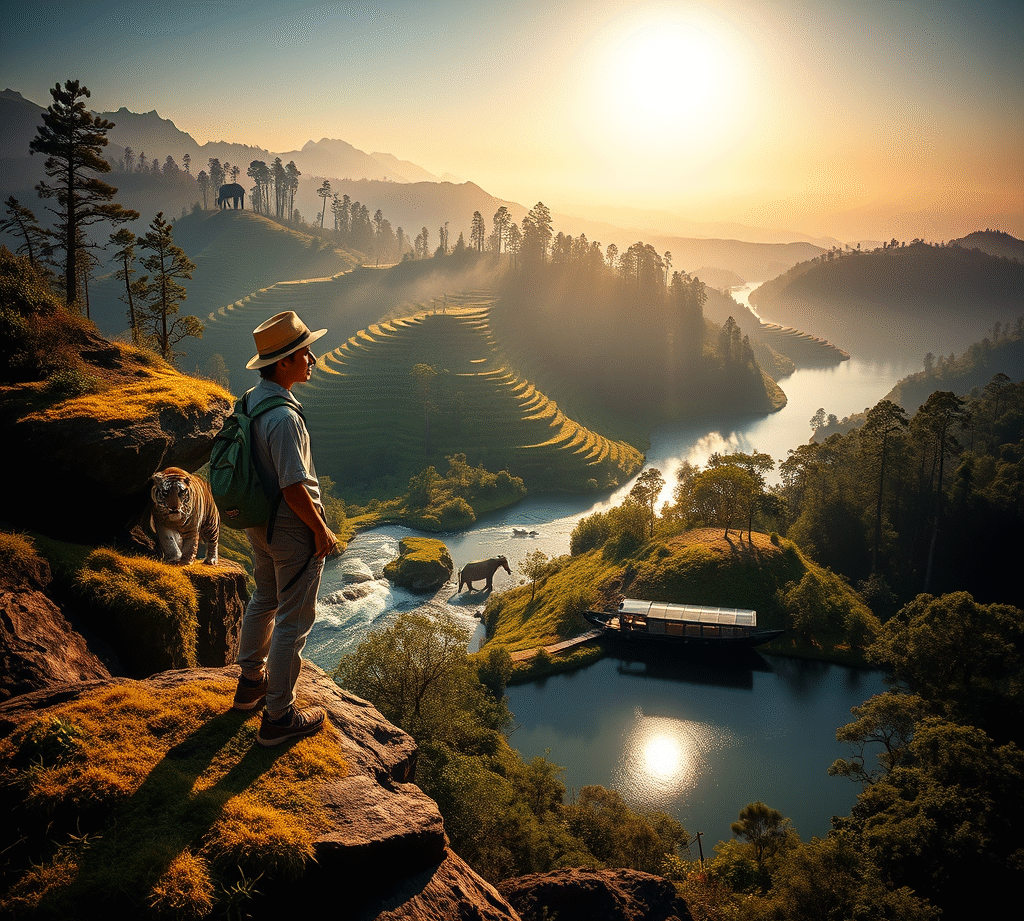
India’s Ultimate Eco‑Tourism & Hill‑Station Travel Guide (2025)
1. Why Eco‑Tourism & Hill Stations Matter
India’s landscape is a patchwork of rainforests, snow‑topped ridges, and shimmering backwaters. Choosing eco‑friendly travel keeps those ecosystems alive while empowering local communities. This guide spotlights destinations that walk the line between protection and excitement, and it shows you how your choices can keep the balance in place.
2. Kabini River & Resorts – Kerala’s Green Oasis
| Feature | Detail |
|---|---|
| Location – Forms the border between Kerala and Karnataka, winding through Nagarahole National Park | |
| Resort Footprint – The Serai uses less than 20 % of its 70‑acre estate, leaving 80 % as untouched wilderness | |
| Thematic Lodges – – Waterwoods Lodge – colonial charm with sweeping Brahmagiri views – Kaav Safari – a playful “Gurgaon‑style” safari – Kabini River Lodge – eco‑lodges overlooking the silver ribbon |
|
| Dining – Farm‑to‑table plates at Red Earth cooked from produce grown on the estate itself |
Pro‑Tourist Tip – Start a River Safari early in the morning to beat the crowds and spot the river’s resident tigers, elephants, and bison. Pack a 2‑inch jacket and a waterproof camera; the misty plunge pool can sneak you a chill.
3. Munnar – The Orchid Valley & Adventure Capital
Altitude – Roughly 1,700 m – a cool refuge no matter the season.
The Neelakurinji Cycle – Every 12 years, the moss‑green valleys bloom in violet with the Neelakurinji orchid. 2024‑2025 marks this rare spectacle.
Trekking –
– Aanamudi – 2,584 m, the Western Ghats’ tallest peak.
– Short hillides: Mattupetty Dam, Echo Point.
Adventure Sports – rock‑climbing, paragliding from hill‑top airstrips, cycling through coffee plantations.
Cuisine – coconut‑oil dishes like Avial, Thengai Dosa, and Eri‑Naram Rural Curry.
Access – 125 km from Cochin International Airport; nearest railheads are Kochi and Ernakulam (Aluva is 12 km closer but less equipped).
Itinerary Scroll – Give yourself at least three full days:
1. Day 1 – Thidal Waterfalls & Eruption View.
2. Day 2 – Peak Trek with a focus on spring flora.
3. Day 3 – Coffee plantation tour followed by a paragliding session.
4. Wayanad – The Elephant‑Tusked Plateau
Highest plateau at ~2,100 m, nicknamed the “Grassland of the Anas.”
Forests older than 3,000 years connect with Mudumalai in Tamil Nadu and Bandipura in Karnataka.
Spices dominate the land: coffee, black pepper, vanilla, honey.
Ecotourism jewels: Banasura Sagar Dam, UNESCO‑listed Kuruva Islands, Iruvana Falls.
Many farms partner with NGOs to keep forest cover intact; visitors can contribute a small eco‑tax that supports wildlife corridors.
Suggested Plan – Stay two nights in a homestay near Wayanad Wildlife Sanctuary, then trek to Kalpetta with a guide for intimate forest stories.
5. Pondicherry – A French‑Indian Cultural Hub
160 km from Chennai; driving takes about 3.5 hours.
Colonial quarter displays pastel‑coloured houses, French villas, and cafés lining the Avenue.
Beaches: Bangarappet, Auroville Beach (salt pond), and Grace Island.
Wellness scene: yoga ashrams, Ayurvedic retreats, the Institute of Yoga.
Cultural calendar: Réunion Café, Les Piscines, and the annual Pondicherry Cultural Festival in November.
Pro‑Tip – Rent a scooter for the French Road through Auroville; locals lease them for about ₹150 a day.
6. Visakhapatnam (Vizag) – The Goa of the East
Wide, sunny shores like Kovalam and Mypore.
Naval heritage: the historic Visakhapatnam Naval Base and a shipyard that closed 12 years ago.
Island escape: Gokarnam Island – a mangrove sanctuary and bird nesting spot.
Cultural mix: the modern Muktaram Satya lunar temple and a zoological park with 450+ species.
Evening Drive – Turn on Jushar Road at sunset for a panoramic view of the Eastern Ghats and the coastal curve.
7. Alleppey (Kochi) – The Venice of the East
The backwaters earn National Geographic a spot among 6th‑ranked water routes worldwide (2023).
Houseboat stays are eco‑friendly, with solar panels on units like Tasmanian and Glimmer.
Coir workshops in Punalur invite visitors to craft mats while sampling local banana dishes.
Alleppey Beach plays sunset hues that vary with the Panchanad tide.
Field Note – Arrive before dawn to taste the fresh Supa Bambar at the backwater dock; a local treat not listed online.
8. Mandagarhi Hills – A 1‑Day Escape from Bengaluru
65 km from Bengaluru; reachable by bus or cab in about two hours.
450 steps lead to a summit that feels like stepping into a painting.
A world‑famous spot for sunset and sunrise; the Deccan plateau spreads in a panoramic vista.
Flora bursts into life, and mist sometimes drapes the hills, giving a mystical feel.
Safety Checklist – Bring ample water, wear a sturdy pair of hiking shoes, and layer with a light jacket; temperatures can dip at the summit.
9. Nainital – The Lake District of Uttarakhand
1,938 m elevation means a cool climate even in summer.
Lake Nainital lets you rent boats from 6 am to 9 pm.
Eco‑Cave Gardens: more than 90 caves circle the lake’s outer rim.
Sattal houses seven lakes wrapped by Himalayan flora.
Bhimtal is a 3‑hour drive away; perhaps a quieter day by the water.
Three‑Day Plan –
1. Day 1 – Lake boat, Mall Road dinner with Nainital paratha.
2. Day 2 – Trek to Snow View; treat yourselves to some sledding fun in Kufri.
3. Day 3 – Sattal’s cave wandering and a river‑side chill.
10. Dehradun – The Educational & Nature Capital
Founded in 1676 by Guru Ram Rai of the Akali Sikh movement.
Highlights: Doont School, Rajiv Gandhi IIM, FRI—all open to guided visits.
Adventurous spots: Mussoorie 6 km uphill, Dhanaulti for quieter family treks.
Climate averages 4 °C in January, 29 °C in June.
Local Wisdom – The Robber’s Cave offers guided tours; use a licensed guide for safety.
11. Silent Valley – Where Conservation Meets Adventure
A biodiversity sanctuary home to the Silandore Blue butterfly (also called Osmia rufespina) and numerous bees.
Dense evergreen forest with bamboo groves.
No large‑scale development is allowed; the area stays pristine.
Suggested activities: guided mountain hikes with the Silent Valley Research Centre, and bird‑watching journeys with local hand‑loper Kailash Rishi.
Permit Reminder – A small fee (~₹400) from the Forest Department is required. Bring a bag that obeys size limits, and keep your vehicle backtracking the rules.
12. Practical Travel Checklist & Sustainability Tips
| Checklist | Why It Matters |
|---|---|
| Season‑Specific Packing | Climate varies from monsoon valleys to desert peaks. |
| Local SIM / Data Pack | Handy for maps, ride‑hailing, and emergencies. |
| Reusable Water Bottle | Cuts down on single‑use plastic everywhere. |
| Respect Wildlife Policies | Keep safe distance; never feed animals in forests. |
| Carbon Offset | Partner with initiatives like GMAL’s Eco‑Carbon refund program. |
Direct Action – opt for eco‑lodges that practice zero‑waste. Many resorts on our list carry green certifications, such as Waterwoods Lodge’s Leader of the Pack award.
13. Conclusion – Your India, Your Eco‑Journey
India’s hill stations and eco‑destinations offer fierce contrasts—mists over coffee plantations, rivers past ancient temples, reefs along serene backwaters. Whether you’re chasing a tiger in Kabini, watching the Neelakurinji bloom, or catching a sunrise over Mandagarhi, each place writes a story that lasts a lifetime. By weaving responsible habits into your itineraries, you help safeguard these treasures for future travelers while soaking in the culture, cuisine, and thrill that each destination gifts.
Ready for your next eco‑adventure?
– Drop your travel dates in the comments.
– Reach out for a hand‑crafted itinerary (links below).
– Subscribe to receive weekly insider updates on India’s hidden ecological wonders.
Useful Resources
– Kerala Tourism Board – Eco‑tourism zones.
– National Adventure Sports Council (NASC) – Certified trekking guides for Wayanad & Munnar.
– WWF India – Latest updates on Silent Valley conservation.
(All links open in a new tab.)