

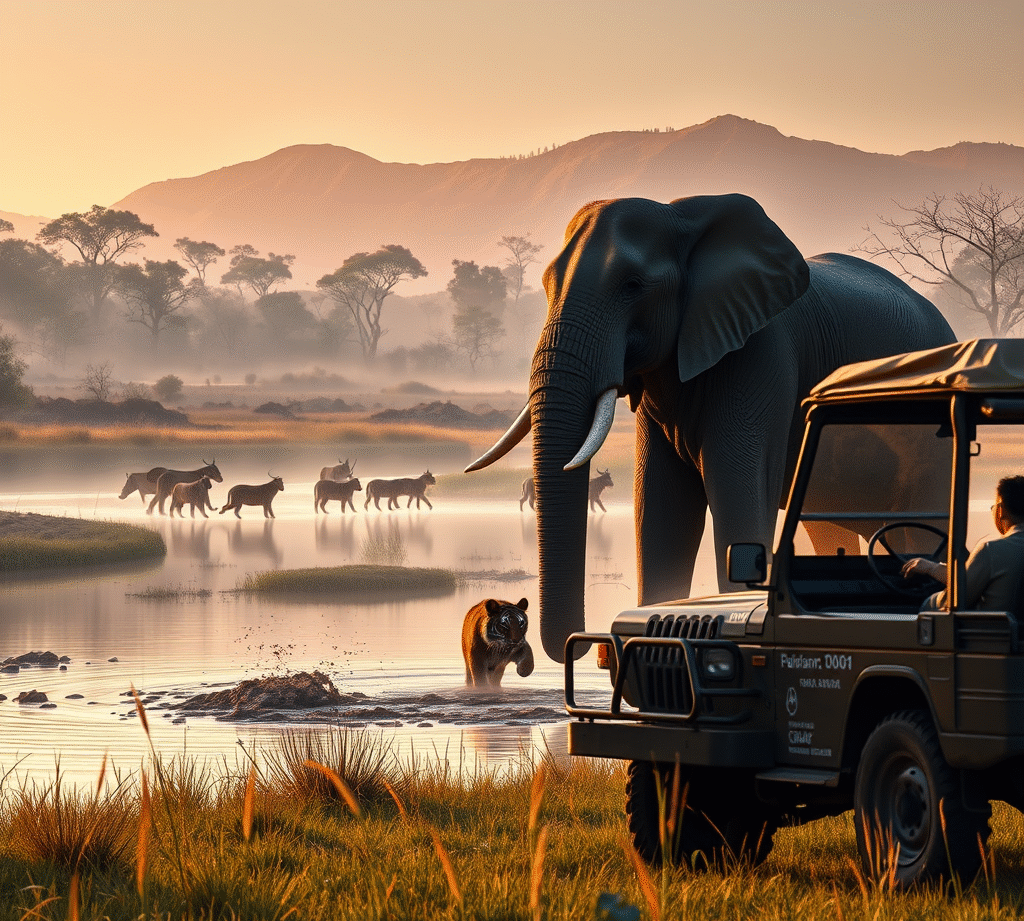
Kanha NP & Kipling Camp: Ultimate Wildlife Guide
Table of Contents
- 1. Why Central India is a Wildlife Lover’s Dream
- 2. Kanha National Park – The Living Laboratory
- 3. Kipling Camp – Heritage, Elephant, and Intimate Safaris
- 4. Step-by-Step Planning Checklist
- 5. Budget-Friendly Safari Shopping List
- 6. Top 15 Wildlife Parks in India – Quick‑Reference Table
- 7. Safety & Etiquette: Keeping the Wild Safe
- 8. FAQs – Quick Answers for the Savvy Traveler
- 9. Conclusion – Your Next Jungle Adventure Awaits
1. Why Central India is a Wildlife Lover’s Dream
Central India pads a patchwork of rolling grasslands, winding rivers, and still‑quiet forests that have kept tiger populations and other wildlife thriving.
| Feature | Why It Matters | Where You’ll See It |
|---|---|---|
| Biodiversity hotspot | A rare mix of mammals, birds, and reptiles. | Kanha, Bandhavgarh, Panna |
| Barasingha sanctuary | The only living pocket of swamp deer in India. | Kanha |
| Small‑scale conservation communities | Low human disturbance keeps ecosystems intact. | Nagpur, Jamnagar, Panna |
2. Kanha National Park – The Living Laboratory
2.1 Ecological Snapshot
- Area: 2,064 km² (the environment, including waterways, stretches to 7,962 km²).
- Prey base: Gaur (> 4,000), sambar, barking deer, chital, and wild dogs.
- Key habitats: Dry grasslands that echo the Thar desert, broad river valleys, cedar, palas, and mahua forests.
“The reddish‑orange palette of palas and mahua, tinged by the iron‑rich Deccan soil, turns the canopy into a golden aurora at sunset.” – Local guide, “Kanha’s Hidden Canvas”
2.2 Tiger Tracking 101
| Guide | Signature Techniques | Legendary Tiger |
|---|---|---|
| Wilson | Pug‑mark recognition (the “puffy‑type” at Umar Pani) | Umar Pani (7‑year‑old male, “linked‑seven” tussles, scent‑mark waterhole Soundar) |
| Karan | Scent‑trail mapping; expert knowledge of Dhawa‑Jhandi (4‑5 yr old tigress with 3 cubs, spotted only twice) | Dhawa‑Jhandi |
| Sishupal | Nighttime pheromone trails; rare Bark Pug‑Mark patterns | Tigers for Community, Tigers for Survival |
Pro‑Tip: Arrive before dawn to catch the roar of a tiger at “Kiyar Waterhole.”
2.3 Surprising Gaur Behaviour
In many wetlands, guars graze after dusk, but at Kanha they roam during the day. One male can block the road, creating a jam that doubles as a rare photo op.
2.4 Conservation Highlights
- Barasingha (Swamp Deer): The “Kanha Barasingha Project” keeps this species alive, sustaining the tiger’s prey chain.
- Habitat restoration: Rebuilding reed beds cleans the water and welcomes aquatic life back into the ecosystem.
“The extinction of barasingha would crack the tiger’s food web in ways we can’t predict.” – Wildlife Officer, Kanha NP
3. Kipling Camp – Heritage, Elephant, and Intimate Safaris
3.1 A Nod to History
Built in 1982 by conservationist C. Lyall Donald of the Wright family, Kipling Camp houses six eco‑tent lodges made from Bauhinia. Guests enjoy 24‑hour showers, smart ventilation, and sunset views over the “Bamhni Dadar” ridge.
3.2 Meet Tara the Elephant
- Size: 5.4 m to the shoulder; 2,800 kg.
- Wild wash‑out: Tara dives into the Banjar River, covering herself in mud—an experience that feels like a living, moving canvas.
- Interaction: Her late‑afternoon dips put visitors right beside the river, letting the jungle’s rhythm pulse through you.
3.3 The Volunteer‑LT Experience
Guests stay in a small group of seven, allowing staff and community volunteers to share stories around a firepit each night. The intimate vibe turns one‑time travelers into advocates who carry a piece of the jungle back home.
4. Step‑by‑Step Planning Checklist
[Download PDF] (link placeholder)
- Book early (June–July). Demand tightens in Kanha and Kipling.
- Check permits (Kanha and tribal lands – 25 + 15 + 10 ₹).
- Pack
- Day: Binoculars (6×), DSLR, water, fresh‑fruit snacks.
- Night: Headlamp, spare batteries, light jacket.
- Safari: Sun‑proof, neutral‑tone clothes and sturdy socks.
- Arrange local guide – confirm a valid Wi‑mann license (the guide’s ID).
- Confirm timings – sunrise about 6:30 am; sunset 6:10 pm.
5. Budget‑Friendly Safari Shopping List
| Expense | Kanha Fees (₹) | Remote Safari (Vehicle + Guide) | Approx. Cost (USD) |
|---|---|---|---|
| Entry | 1,500 | – | $0.09 |
| 4‑day jeep safari | 2,000 daily | 2,000 daily | $4.63 |
| 4‑day 4‑WD | 4,500 daily | 3,500 daily | $6.67 |
| 5‑day RV safari | 2,400 daily | 2,400 daily | $5.22 |
Tip: Overnight camps cut lodge costs by about 15 %.
6. Top 15 Wildlife Parks in India – Quick‑Reference Table
| # | Park | Best Time | Main Fauna | Entry Fee (₹) | Vehicle+Guide (India) | Vehicle+Guide (Foreign) |
|---|---|---|---|---|---|---|
| 1 | Ranthambore | Nov – May | Tiger, leopard, nilgai | 200 | 1,200 | 1,200 |
| 2 | Jim Corbett | Nov – Mar | Tiger, crocodile, sambar | 1,250 | 2,000 | 2,000 |
| 3 | Bandhavgarh | Oct – May | Leopard, tiger, chital | 2,200 | 3,500 | 3,500 |
| 4 | Kanha | Oct – May | Tiger, barasingha, gaur | 2,000 | 2,000 | 2,000 |
| 5 | Kaziranga | Dec – Feb | Rhino | 100 | 900 | 900 |
| 6 | Sundarbans | Dec – Feb | Tiger, mangrove | 60 | 400 | 400 |
| 7 | Gir | Mar – Oct | Lion | 75 | 35 | 35 |
| 8 | Pench | Nov – Feb | Deer, tiger | 15 | 150 | 150 |
| 9 | Periyar | Oct – Apr | Elephant | 45 | 100 | 100 |
| 10 | Manas | Jul – Sep | Rhino, tiger | 20 | 300 | 300 |
| 11 | Kanyakumari | Apr‑Jun | Reptiles, birds | 120 | 350 | 350 |
| 12 | Amphib Attraction | Oct–Mar | Saltwater crocodile | 25 | 200 | 200 |
| 13 | Pawankhind | Oct–Mar | Deer, leopard | 110 | 200 | 200 |
| 14 | Devabhuti | Oct–Mar | Tiger, elephant | 90 | 250 | 250 |
| 15 | Som Bhadra | Oct–Apr | Wild dogs, peafowl | 80 | 300 | 300 |
*All fees apply to Indian nationals; foreigners pay roughly 1.2 × the resident rate.*
7. Safety & Etiquette: Keeping the Wild Safe
| Topic | Recommendation | Why It Matters |
|---|---|---|
| Noise | Keep voices low; use walkie‑talkers on long spans | Prevents shielding predators from danger |
| Food | Never leave scraps; use the provided trays | Stops wildlife from learning to respect human scent |
| Distance | Keep at least 25 m from every animal | Protects you and the animal’s natural rhythm |
| Photography | Go zoom, and avoid flash | Flash can startle or disorient animals |
| Carbon Footprint | Choose local guides, help trim waste | Supports sustainable living in the park |
8. FAQs – Quick Answers for the Savvy Traveler
| Question | Answer |
|---|---|
| When is “Golden Hour” in Kanha? | 6:30–7:00 am & 5:30–6:00 pm (sunrise, sunset). |
| Do I need a medical waiver? | Yes, all tourists sign a waiver on entry under IUCN guidelines. |
| What clothing is best? | Neutral photons, layered; ban bright colors that attract insects. |
| Can I bring a dog? | No. It disrupts wildlife and may bring disease. |
| Is Tara the Elephant protected? | Absolutely – under the Bombay Prevention of Cruelty to Animals Act. Contact must go through park officials. |
9. Conclusion – Your Next Jungle Adventure Awaits
Central India’s mosaic of grasslands, rivers, and forests invites every nature‑lover to step off the beaten path. With Kanha’s hand‑tested wildlife science, Kipling Camp’s heritage charm, and a clear budget guide, you’ve got everything to craft a safari that feels alive, thoughtful, and truly memorable.
Ready to book?
- Reserve a Kanha safari slot at least 28 days before arrival.
- Secure a stay at Kipling Camp through the official Gulf‑Sahara Reserve portal.
“I went for another round because the jungle knew my steps.” – Exploring Institute
Let the Indian jungle become your teacher, your thrill, and your pledge for a sustainable future.
Quick‑Links