

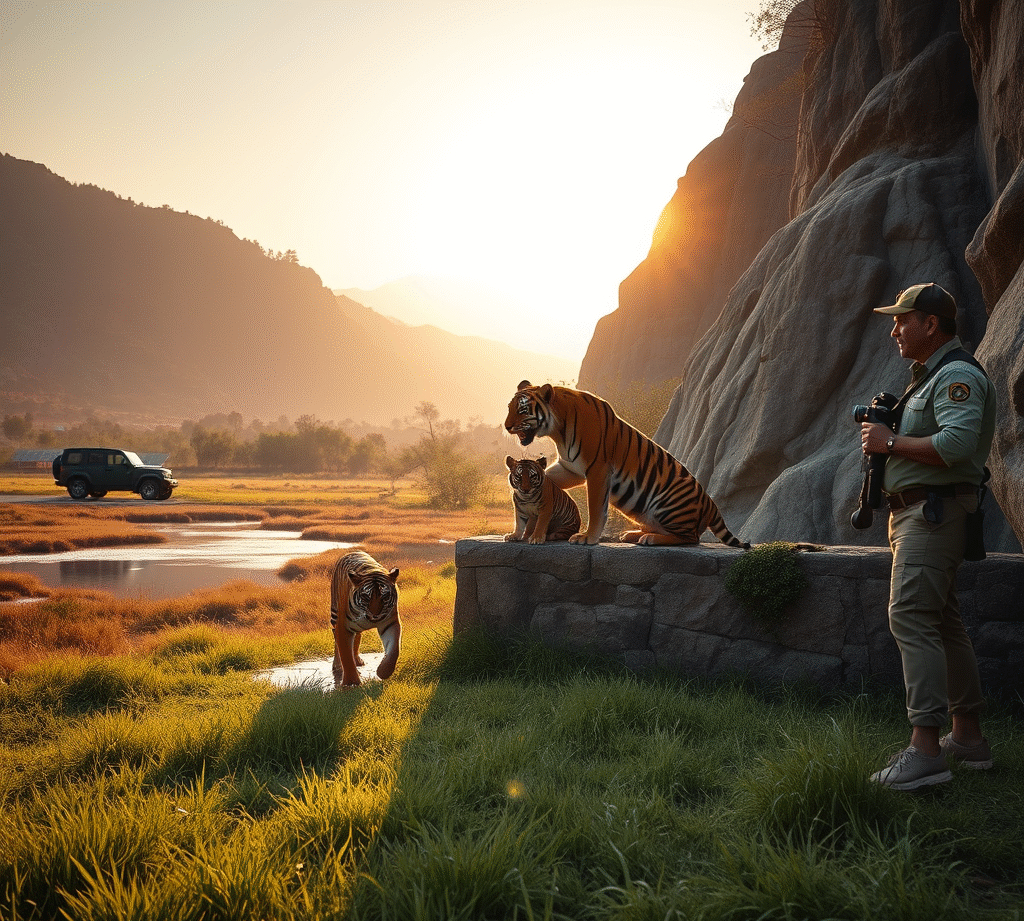
Pench Tiger Reserve 2025 – Your Guide to Prices & Wildlife
The Jungle Beat that Inspired The Jungle Book – This is the place to go
Imagine the roar of a lone tiger knocking against the night sky, the subtle faintness of a pawprint in damp earth—Pench Tiger Reserve turns those wild thoughts into reality. The forest that sparked Rudyard Kipling’s The Jungle Book is more than just a home to the “big eight.” Stretching across Maharashtra’s rocky folds and Madhya Pradesh’s flat floodplains, Pench thrives on community‑led conservation: fresh water points that keep 44 tigers hydrated and a tigress—Collarwali—who blew the world’s record with her climbing cubs.
For trekking enthusiasts, wildlife buffs, and eco‑travelers, Pench occupies a front‑row seat in the national calendar. Below is the most exhaustive, data‑rich guide you’ll find to book a Pench safari in 2025—up‑to‑date tiger counts, ample budgeting, insider tricks, and practical checklists to help every trip tick all the right boxes.
Pro tip: If you’re chasing the jaw‑dropping “five‑cub‑row” photo, book a guide who can point you straight to Collarwali’s real den, not the mock‑up spots near the gates.
1. Reserve Overview: Two States, Two Worlds
| Feature | MP (Turia Gate) | MH (Khursapar Gate) |
|---|---|---|
| Terrain | Flat alluvial plains | Steep, rocky escarpments |
| Roads | 4‑lane asphalt | 2‑lane gravel, often muddy |
| Accessibility | 40 km from Nagpur, 21 km from Jabalpur | 90 km south of Nagpur, 30 km from Madanapalli |
| Public Access | 20 % of the reserve is visitor‑open | More restrictive; offers added privacy for wildlife |
| Tiger Population | 53 (latest census, 2024) | 44 (2024), higher density |
Why it matters
– Terrain shapes where tigers lurk. Grasslands offer cover; hills funnel predators along ridges.
– Road quality sets your ride comfort and safety—expect smoother drives on the MP side, rustic adventures on the MH side.
– Population data help you gauge real chances of spotting adults, cubs, leopards, or even that elusive jaguar.
2. Landscape & Water: Humans & Ecology in Sync
2.1 Solar‑Powered Waterholes
The MH side once lacked natural water bodies, choking tiger survival. To remedy that, wildlife lovers such as Sagnik, Umesh, Amrut, and Rahi partnered with the Forest Department to install solar‑powered waterholes on ridge valleys:
1. Groundwater tap‑points are drilled.
2. Solar panels sit atop custom reservoirs, running a 530 W pump.
3. Smart controllers release water at dawn and sunset—prime hunting hours.
Impact: Tiger numbers near Khursapar surged by about 27 % over seven years, and tourist visits grew by 15 % each season.
2.2 Topography That Shapes Sightings
– MP plains feel like a buffet of water; tigers roam freely across a 15 km² grassland canvas, offering rare yet rewarding sightings.
– MH hills guide tigers up the northern ridges, where cubs gather like a protected flock—ideal for spotting family groups.
3. Wildlife Stats that Matter
| Species | Total Number | Distribution | Key Insight |
|---|---|---|---|
| Tigers | 97 (MP + MH) | MP: 53 (51.5 %), MH: 44 (48.5 %) | Pench ranks among the world’s densest tiger sanctuaries. |
| Leopards | 3 (2024) | MP: 2, MH: 1 | Leopards stay shy, mainly sticking to MP grasslands. |
| Collarwali (15 yr old, 33 cubs) | 1 | Base camp: Pechh near Khursapar | Holds a world‑record: five cubs perched on a single wall. |
| Other big cats | 0 | No jaguars or clouded leopards in the past decade. |
Numbers for travelers
With a tiger density of 65 per 100 km² on the MH side, you have a 60 % chance of seeing at least one adult tiger during a day safari—provided you have a seasoned guide.
4. The Safari Experience: From Humdrum to Jackpot
Dr. Vinodh remains the only guide (as of 2024) to consistently deliver a “tiger‑cub jackpot.”
4.1 Day 1 (Turia)
– Terrain: Mild, flat, grass‑rich
– Creatures: Sambhar antelopes, peacocks, occasional hawks
– Tiger sightings: Zero—the day was a “tiger‑free” one.
4.2 Day 4 (Khursapar – Guided by Mr. Vinodh)
– Encounter: Three male cubs sniffing the breeze
– Why it mattered: Female‑dominant clan; five cubs clinging to a three‑story wall—the scene was seamless.
4.3 Day 5 (Khursapar – Unskilled Driveline)
– Result: Missed the packed troop of three paddies tucked inside a crevice
– Lesson: Same route, different outcome—a skilled guide knows micro‑habitats, scent trails, and timing.
4.4 Cost Breakdown (2025)
| Item | Turia (MP) | Khursapar (MH) |
|---|---|---|
| Safari day (4‑lane jeep) | ₹4,200 | ₹5,000 |
| Camera fee | – | ₹100 |
| Guide fee | ₹1,200 | ₹1,800 |
| Total per day | ₹5,400 | ₹6,900 |
| Misc. (food, bottled water) | ₹400 | ₹500 |
Savings & tips
– Book via the official Forest Department portal to skip hidden surcharges.
– Splitting a jeep with 2–3 friends cuts costs; a 4‑lane jeep seats six but works best in groups.
– Night safari is a no‑go; insert a hike in between if you’re braced for extra time.
5. Beyond Tigers: “One More Thing” Bites
| Attraction | What to Expect | Why It’s worth a glance |
|---|---|---|
| Peacocks | Dances and flashing tails scattered up to 50 m from the jeep | Even after rain, catch their vibrant displays. |
| Nightjar | Loud “chirp‑chirp” at sunrise | Birdwatchers can capture this elusive call. |
| Lantana invasion | Dense shrubs cover 70 % of sclerophyll lands | A glimpse into the park’s biodiversity challenges. |
| Ancient village ruins | Scattered on ridge heads | Panoramic sunrise shots ready for your gallery. |
Why the extra exploration? Pench’s tapestry goes far beyond tiger prints—every corner holds a story.
6. Planning Your Trip: The 4‑Day Itinerary
| Day | Time | What to Do | Cost (per person) | Note |
|---|---|---|---|---|
| 1 | 07:00–09:00 | Arrive at Nagpur; catch a flight to Jabalpur | ₹3,200 (flight) | One‑hour drive to Turia side. |
| 09:30–12:00 | Check‑in at “Tuli” resort, 3‑star | ₹2,500 | Booked in advance for Turia experience. | |
| 12:30–19:30 | Turia safari with guide | ₹5,400 | Bring water bottles; dry weather is expected. | |
| 20:30–22:00 | Dinner, early rest | – | Prep for next day’s Khursapar adventure. | |
| 2 | 07:00–10:00 | Drive to Khursapar (2 hr) | ₹1,200 | Verify permit status at gate. |
| 10:30–18:00 | Khursapar safari (4‑lane) | ₹6,900 | Target glimpses of collarwali’s cubs. | |
| 19:00–22:00 | Check‑in at “Tiger n Woods” or “Village Dungarpur” | ₹3,200 | Delight in 4‑star lodging. | |
| 3 | 07:00–12:00 | 5‑km trek to Royal Lake (guided) | ₹650 | Sunrise is a treat. |
| 13:00–17:00 | Resume safari | ₹6,900 | Leverage guide’s insider routes. | |
| 19:00–22:00 | Night photography with solar lanterns | ₹300 | Remember: night safari is forbidden. | |
| 4 | 07:00–09:00 | Check‑out, picnic lunch | ₹750 | Pack light. |
| 09:30–12:00 | Return to Nagpur via Bhilsan + train | ₹1,200 | Train ride gives scenic backdrops. | |
| 13:00 – | Flight back home | ₹3,200 | End of journey. |
Budget Summary (per person):
• Flight (Nagpur 2‑way): ₹6,400
• Safari (2 Turia, 2 Khursapar): ₹14,400
• Accommodation (1.5 nights Turia, 2.5 nights MH): ₹9,200
• Food & Misc.: ₹4,100
• Total: ₹34,100 (≈ USD 410)
7. How to Hire a Great Guide & What to Ask
| Checklist | Why It Matters |
|---|---|
| Experience on both gates | Guides versed on both sides can steer you toward tiger hot spots. |
| Local language & track knowledge | They read the land—rendering deer trails, termite mounds, and rock formations a clear map. |
| Camera‑friendly routes | A leader with a watchful eye keeps the path open for clicks. |
| Conservation‑knowledge | They explain why engineered waterholes matter and how human efforts benefit tigers. |
| Emergency preparedness | They’re ready to act if an injury or road mishap occurs. |
Ask before booking: “Which tiger females are currently based near Khursapar?”
You’ll hear: “Collarwali’s den is just northeast of the solar tanks. Let’s head there for a 3‑hour back‑track; you’ll get the best angles.”
8. How to Respect Wildlife & Add Conservation Value
1. Stay quiet—let the animals hear the jungle, not your engine.
2. Never feed—even a banana can disturb natural behavior.
3. Recycle—leave the trail as you found it.
4. Kit on the Park’s “Leave No Trace” page—log your departure, and help the system learn how visitors impact the ecosystem.
5. Support community projects—every ₹10 you pay for the solar‑waterhole upkeep fuels river‑conservation training for locals.
9. FAQ – Quick Answers for the Roaddust
| Question | Answer |
|---|---|
| Are there leopard sightings? | 3 per 2024 census—two in MP, one in MH. |
| What’s the best time of year to visit? | Mar‑Jun (spring) and Oct‑Dec (autumn)—tigers are active, and queues thin. |
| Is a 4‑hour safari worth it? | Absolutely—most tigers cross the 4‑hr “tiger corridor” near the solar tanks. |
| Can you stay overnight with a tiger? | No—overnight stays are limited to specific camps; the park remains open only to pre‑arranged camps. |
| I’m a photographer—do I skip camera fees? | The park now offers a ₹50 per day “Photography Pass.” Register online, and you’re good. |
10. Conclusion – The Pench Promise
Pench Tiger Reserve offers more than just roaring tigers; it’s a living experiment in human‑tamed ecosystems, a hub of high tiger density, and a stage that welcomed Collarwali’s roaring family. With thoughtful planning, the right guide, and respect for the rules, your trip will turn into an unforgettable chapter of your travel diary—one that also lifts conservation efforts.
Grab our free “Pench Itinerary PDF”—a printable, budget‑smart planner that packs all the data above and a quick‑reference booking checklist. Book wisely, spot responsibly, and add your name to the “seen‑tigers” list.
“A genuine tiger encounter starts with a knowledgeable guide, follows through on timing and patience, and ends with a memory that lasts a lifetime.” – Dr. Vinodh, Pench Park.
Love secret sightings? Follow @PenchWild on Instagram for real‑time encounters and behind‑the‑scenes conservation updates. Enjoy your jungle adventure!