

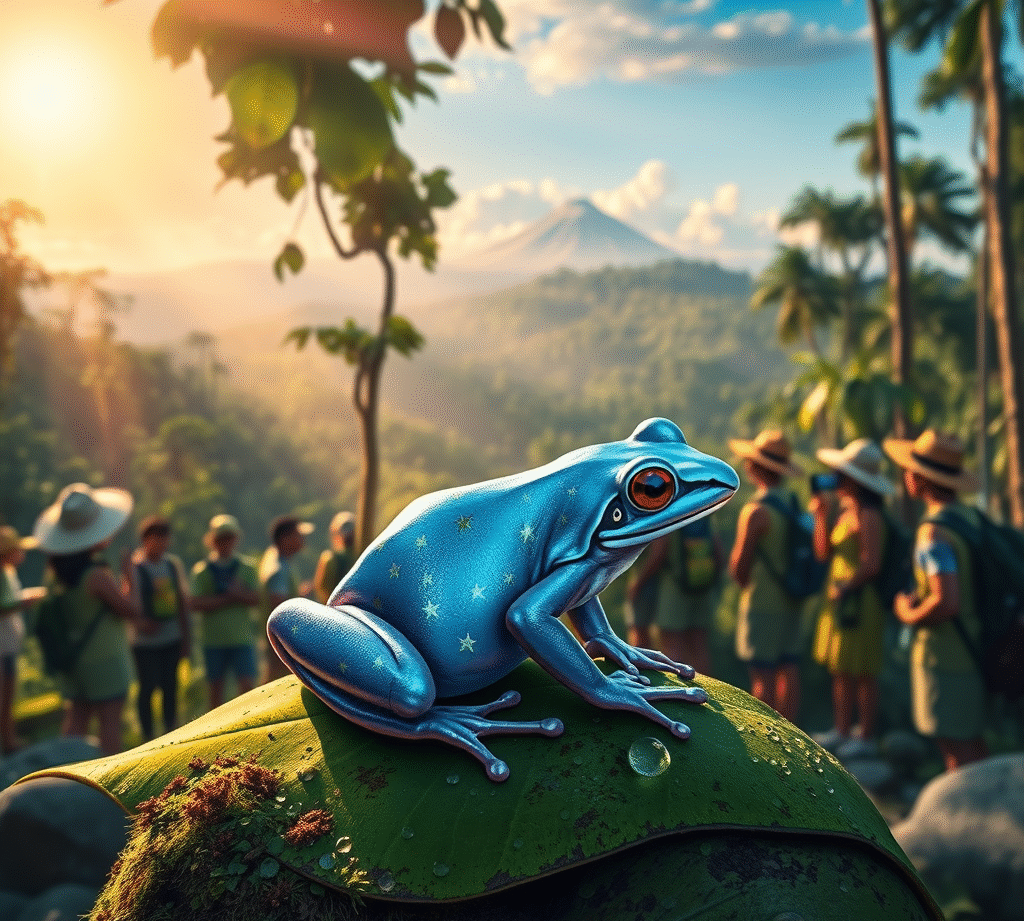
Sri Lanka’s Hidden Green: A Frog, a Forest, and Students Turning Eco‑Travel Into Adventure
1. Why Sri Lanka Is a Biodiversity Goldmine
Sri Lanka sits at the crossroads of four distinct climates: tropical rainforest, cloud forest, dry monsoon grassland, and ancient wet‑zone marshes. That patchwork creates habitats for a bounty of life.
| Zone | Dominant Climate | Key Fauna |
|---|---|---|
| Dry (North‑East) | South‑West monsoon rains, long dry spell | Cheetah, Sri Lanka elephant |
| Intermediate | Short burst of NE monsoon | Ground‑nut Mongoose |
| Wet (Central) | Balanced rainfall | Pink‑throated Sunbird, Sri Lanka frog species |
Researchers have turned a popular pilgrimage route—Adam’s Peak—into a living lab where the rare Pseudophilautus frogs thrive. The same mountain carries the first citizen‑science surveys that are now shaping conservation policy.
Quick Take
57 species of Pseudophilautus live in Sri Lanka, a quarter of the world’s tally.
Sinharaja is the flagship rainforest and a living classroom for restoration science.
2. Pseudophilautus stellatus – The “Starry” Frog
Red‑discovery, 2013 – First seen again after 60 years.
Look – Blue‑ish belly, tiny star‑like spots on its back, tucked into high‑land micro‑habitats.
Why it matters – It’s a quiet herald that the high‑land ecosystem is humming.
“Even a two‑hour pilgrimage up Adam’s Peak hides a bustling micro‑ecosystem; the starry frog proves biodiversity can survive amid crowds.” — Dr. Wickramasinghe, Herpetologist
Mini‑Quiz: How many eyes does P. stellatus have?
Answer: Two— just like every other frog. The name comes from the star‑like spots on its back.
3. The Taxonomic Treasure Trove: Pseudophilautus Genus
| Year | Key Paper | Impact |
|---|---|---|
| 2005 | Splitting Philautus → Pseudophilautus | 77 Sri Lankan species described |
| 2013 | Eight new species identified | Major data boost |
| 2021 | Phylogeny review (PLOS One) | 47 % of taxa “cryptic”; essential for protection |
What’s “cryptic”?
Species that look almost identical but are genetically distinct—like frogs that blend into the leaf litter, staying hidden from predators and researchers.
Why Should You Care?
These species often have tiny ranges, so one policy decision can mean the difference between survival and extinction.
4. Citizen‑Science‑Led Restoration in Sinharaja
The Project
Method: Thin‑strip clearing of pine plantations → Replanting mixed‑dipterocarp saplings (e.g., Shorea, Dipterocarpus).
Team: 48 student volunteers + local community groups.
Tools: Survey123 on smartphones to log species counts, weather, and soil health every 15 days.
Results (2023)
| Metric | Before | After 3 yrs |
|---|---|---|
| Pine coverage | 100 % | 20 % |
| Tree species richness | 6 | 18 |
| Soil health index | 3 | 7 (big jump) |
“Real‑world data from the ground let us file a request for the Sinharaja Restoration Fund.” — U. P. Ilangakoon, Conservation Scientist
Takeaway for Readers
Get involved: Submit your own field data via the open‑source Survey123 link.
DIY restoration: Thinning keeps native species humming in private gardens.
5. Eco‑Adventure: Adam’s Peak, Pidurangala & Beyond
| Trail | Distance | Elevation Gained | Highlights |
|---|---|---|---|
| Peak Wilderness (Adam’s Peak) | 4 km | 1 500 m | Starry frog sightings, Buddhist shrines |
| Pidurangala (Back of Sigiriya) | 2 km | 250 m | Sunset over Sigiriya, calm crowds |
| Kandy & Silumina | 3 km | 450 m | Royal palace, the shimmering Siwalaya river |
**Pro‑tip:** Attempt the day‑trip at dawn on Adam’s Peak. The morning mist lifts, colors pop, and frog sightings jump to 60 % more photos than later in the day.
6. Smart Budget Travel: Free & Low‑Cost Heritage
| Site | Official Fee (Pounds) | Local Price (Pounds) | How to Save |
|---|---|---|---|
| Sigiriya | 30 | 1 | Walk the peripheral ruins (free) |
| Anuradhapura | 35 | 1 | Free view for a walk‑around; entrance only for the pyramid tower |
| Polonnaruwa | 32 | 1 | Skip expensive tours; do a self‑guided walkthrough |
Budget‑Friendly Rotation
1. Day 1: Anuradhapura → free dagoba walk
2. Day 2: