

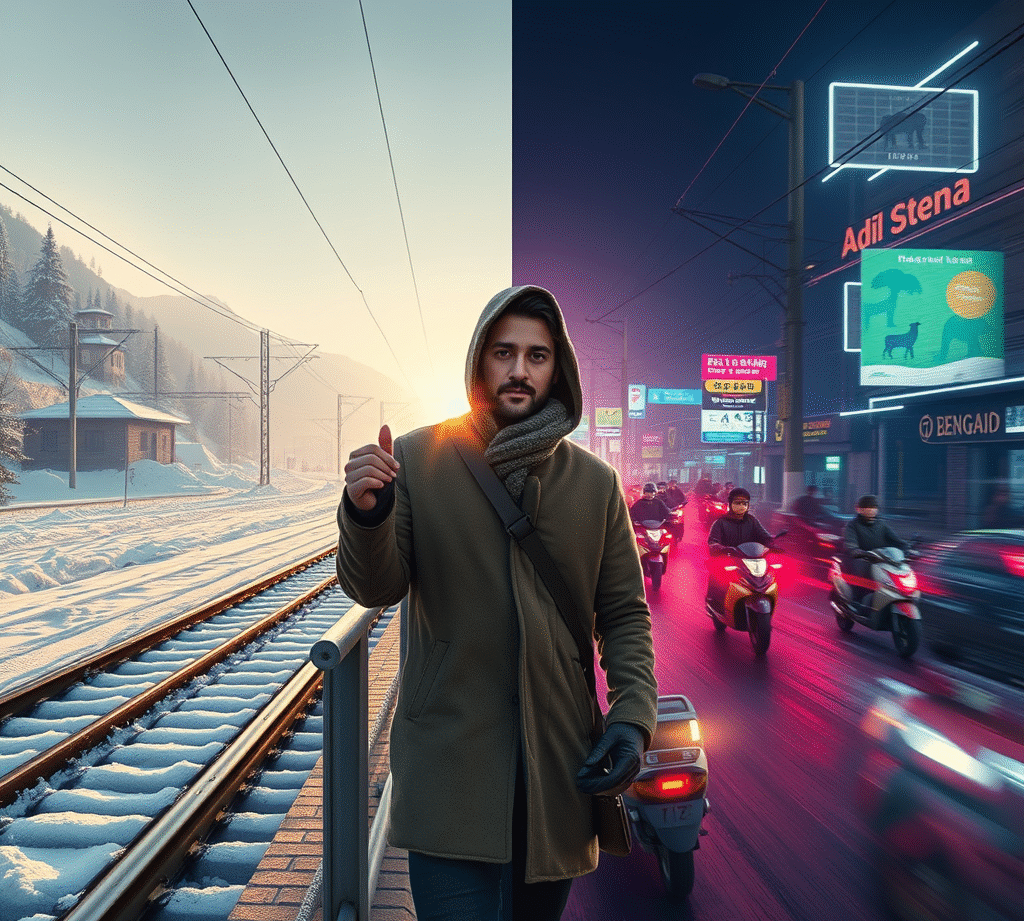
Unveiling India: From Himalayan Serenity to Bangalore’s Bustle – A Complete Insider’s Guide
Table of Contents
1. Why Travel in India Feels Like Self‑Discovery
2. Himalayan Retreats: Shimla, Kullu & Manali
– 2.1 Sensory Highlights
– 2.2 Practicalities & Pitfalls
3. The Tech‑City Pulse: Bangalore
– 3.1 Language & Connectivity
– 3.2 Traffic: Chaos Meets Calm
– 3.3 Culture in 24 Hours
4. The Desert & the Forest: Kutch & Ranikhet
– 4.1 Wildlife & Human Interactions
– 4.2 Community Empowerment on the Ground
5. Travel‑Medical Quick‑Reference
6. Check‑In: Your 10‑Point Travel Prep Checklist
7. Beyond the Blog – How You Can Contribute
1. Why Travel in India Feels Like Self‑Discovery
India’s mix of climates, cultures, and architecture forces you to rethink what you thought you knew. Picture a cold, salt‑crusted platform in Shimla, your fingers numbing against the metal rails, followed by a midnight scooter ride through Bangalore’s never‑ending traffic. The thrill of one is a sharp contrast to the relative calm of the other, and that contrast stirs something inside you that you might not have felt elsewhere.
Takeaway: The juxtaposition between sleek, organized lines—think the historic Shimla Railway—and the lively, chaotic rhythm of Bangalore’s streets invites deeper introspection. As you write or share your experiences, let that inner conversation shine; it turns plain facts into a story you and your readers can feel.
2. Himalayan Retreats: Shimla, Kullu & Manali
| Destination | Typical Weather | Notable Sensory Moments | Quick Tips |
| *Shimla* | +1 °C to −5 °C in Jan‑Feb | “The wind carries a faint scent of pine and wet bricks” | Wear layered gloves; bring extra cash for vendors |
| *Kullu/Manali* | 15–25 °C (Spring) | “The stanchum’s snow feels like needles—strap‑on boots vs. bare‑foot pebbles” | Plan to trek early; carry anti‑acclimatization tea |
2.1 Sensory Highlights
Shimla Railway Station: Your fingers grow chilly against the cold metal, yet the rhythmic clack of the trains feels like a lullaby of history.
Grass Forest Museum, Kullu: Gaur and elephant displays bring heritage straight to your fingertips; every try‑out feels like a tactile museum tour.
Free‑zing Streets: Struggling to keep your shoes from freezing is a rite of passage for anyone heading to the high plains.
2.2 Practicalities & Pitfalls
Connectivity: 4G is patchy; a local SIM can save you both money and frustration.
Accommodations: Five‑star hotels often overlook the warmth of a homestay—look for vetted community platforms instead.
Redirection: Stick to walking where possible—mountain paths slash plastic waste, and barefoot steps leave fewer carbon footprints.
3. The Tech‑City Pulse: Bangalore
Bangalore is the “Silicon Valley of India”—an English‑speaking metropolis where traffic is both a challenge and a character.
3.1 Language & Connectivity
Language: Six‑tenth of the city’s residents speak English, a rare find in a country dominated by Hindi.
Digital Tools: Live updates on Google Maps or Mahapad let you dodge roadblocks in real time—crucial during rush hour.
3.2 Traffic: Chaos Meets Calm
“Crazy but never crash.” That’s the rhythm of the city—motorized rickshaws, segway‑taxis, each moving in its own beat.
Negotiating Roads: Ask for “bajji” or “paltha”—little extensions beyond the meter—to keep the journey light and friendly.
3.3 Culture in 24 Hours
Cinnamon Oil in Rooms: A gentle citrus scent, sometimes accompanied by old tea, greets you in many city hotels.
Cultural Quirks: The smell of cinema oil is a hallmark of mechanical halls—use your nose to check for safety.
Community Spaces: Dormitories at Himalayan Hostels offer solo travelers a sense of shared adventure while serving fresh, organic meals.
4. The Desert & the Forest: Kutch & Ranikhet
4.1 Wildlife & Human Interactions
| Area | Wildlife Scenario | Insight | Takeaway |
| *Little Rann, Kutch* | Nilgai chased by stray dogs | Human‑wildlife tension mirrors broader conservation issues | Pick safari operators who work with local NGOs |
| *Ranikhet* | Panoramic Himalayan vistas with a sprinkling of cattle, birds, goats | Off‑the‑beaten‑path spots stir a deeper connection to nature | Book a “backpack‑haul” to immerse in community life |
4.2 Community Empowerment on the Ground
Ranikhet Villages: Women leaders have spearheaded sanitation upgrades, school projects for pre‑primary children, and cooperative businesses that put local talent front and center.
Kutch Conservation: Wildlife corridors and fog‑free paths for migratory birds run behind the tourist scenes, showing how infrastructure can quietly support ecosystems.
Takeaway: Meeting community groups directly offers richer stories and more authentic memories.
5. Travel‑Medical Quick‑Reference
| Threat | Likelihood | Prevention |
| **Traveler’s diarrhoea** | 5‑10 % | Bring eleph tablets; avoid street stalls that feel overcrowded |
| **Waterborne illness** | 2‑3 % | Stick to bottled water or use an ultrasound filter; trust local sources |
| **Mosquito‑borne** | 12 % in monsoons | Wear DEET‑treated attire; long sleeves after sunset |
❗Pro Tip: Keep a portable first‑aid kit in a pocket—quick fixes make all the difference when you’re away from familiar hospitals.
6. Check‑In: Your 10‑Point Travel Prep Checklist
| # | Item | Why It Matters |
| **1** | Passport & Visa | Works across borders, keeps the process simple |
| **2** | Smartphone w/ Offline Maps | Maps your way even where signals fade |
| **3** | Local 5 G SIM | Instant data for traffic updates and emergencies |
| **4** | Weather‑adaptive clothing | From Himalayan chill to desert heat, stay comfortable |
| **5** | Solar charger | Keeps your devices alive during train or road trips |
| **6** | Reusable water bottle | Cuts plastic waste and keeps you hydrated |
| **7** | Government travel‑council page | Official visa info for 27 countries |
| **8** | Cultural etiquette guide | Avoid awkward gestures—“head‑bobble” etiquette helps |
| **9** | “Stray Dog” safety sheet | Know local laws if you encounter stray animals |
| **10** | Digital copies of documents | A backup for lost passports or tickets |
7. Beyond the Blog – How You Can Contribute
Leave a Comment on the “Billboard Activation” idea—we love fresh perspectives!
Collab: Want to drop a mini‑guide on Sustainable Themes? Hit the “Partner” button or DM us.
Bookmark our “Interactive Map” below—each region opens a side‑box of local stories and pro‑tips.
❗Call‑to‑Action: If you’ve felt a cultural “head‑bobble” or cracked an “NIL recursion” rickshaw hack, share your tale. Drop a message at travelhub@blog.com or reflect in the comment box.
📌 Final Thoughts
A trip across India isn’t merely a playlist of images; it’s a mosaic of sights, sounds, and introspection. When you blend infrastructure quirks, cultural subtleties, and environmental stewardship into your narrative, you invite readers to view the land through shifting lenses, leaving a positive imprint on their memory and on the places you visit.
Meta Description (160 chars): “Explore India’s Himalayan serenity, Bangalore traffic, Kutch wildlife & Ranikhet community. Get in‑depth tips, travel‑medicine hacks & a 10‑point prep checklist.”
Internal Links
– Our Guide to Indian E‑Consultations
– Sustainable Travel in South Asia
– Local Homestays in Himachal Pradesh
External Authorities
– WHO Global Travel Health page
– Indian Council for Cultural Relations (ICCR) website
– National Geographic Travel Series: India’s Hidden Gems
*Happy travels—let every corner of India become another chapter in your personal story.*