

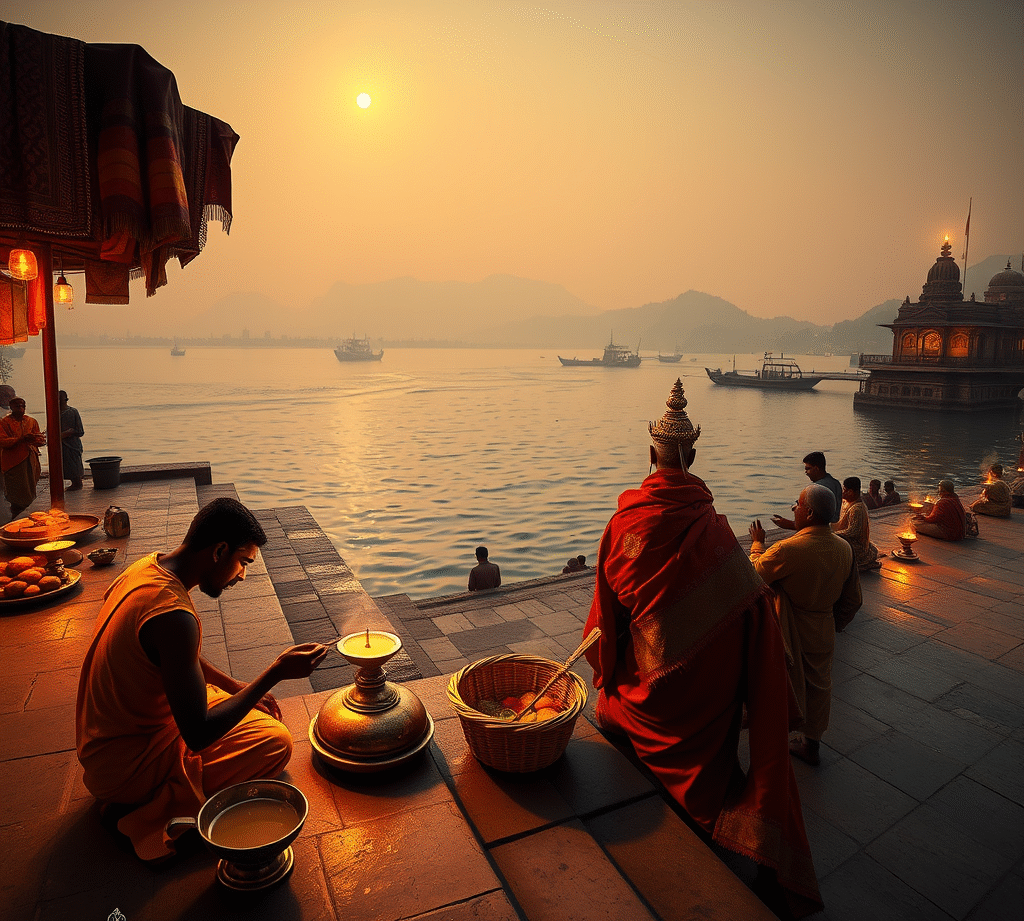
VARANASI – THE LIVING PULSE OF SACRED RIVER GANGA
Varanasi—also called Kashi is more than a city. Imagine a place carved by stone, river, and devotion, where 12,000 years of history whisper from every street corner and every ripple of the Ganga. Picture bustling food stalls, the shimmer of Banarasi silk, and the evening glow of Aarti rituals. In this guide we’ll walk through the city’s most celebrated sights: its 88 ghats, the revered Kashi Vishwanath Jyotirlinga, and the city’s fascinating “death hotel.” We’ll also give you practical, etiquette‑sensitive advice so you can experience Varanasi with respect and wonder.
1. A City Born from Myth and Water
| Element | What It Means | Why It Matters |
|---|---|---|
| 12,000‑year iconography | A Shiva image carved before 12 k BCE, proving Varanasi is the world’s longest‑standing city. | Sets a tone of reverence that colors every street, ghat, and temple. |
| Varun‑Assi etymology | The name “Varanasi” blends the Ganga’s main god Varuna with the Assi tributary. | Helps travelers orient themselves—gives context to the river’s meeting spot. |
| Mythic roots | Tales of Shiva, Parvati, and other deities interweave with the city’s layout. | Creates a pilgrimage vibe that draws millions every year. |
2. The 88 Ghats – Spiritual Stairs to the Divine
2.1 What Are Ghats? Ghats are stepped embankments that bring the river down to the city. In Varanasi you’ll find 88 distinct ones, each with its own ritual, clientele, and style.
Quick fact – The most celebrated are Dashashwamedh Ghat, the oldest and most sacred, and Manikarnika Ghat, the cremation site that’s visible from the sea.
2.2 Highlights You’ll Want on Your List
| Ghat | Why It’s Special | What You’ll Experience |
|---|---|---|
| Dashashwamedh | Nearly 500 years old, hosts nightly Aarti. | Watch the river glow as lamps dance in the dusk. |
| Manikarnika (Cremation) | Two hundred cremations happen a day; a living symbol of death and rebirth. | Observe the city’s deep relationship with mortality (don’t, however, focus on the photo‑table). |
| Kashi Vishwanath | The Jyotirlinga temple lies in a small suburb; a pilgrimage must‑see. | Get up close with the revered pillar of light. |
| Assi Ghat | A relaxed spot with cafés and tea stalls. | Sip the famed Assi‑Ghat chai—a full‑blend milky delight. |
| Alinagar & Harishchandra | Quiet hamlets that hold ordinary cremation rites. | Experience the city’s quieter, contemplative corners. |
Practical note – Slip on sandals; the pathways between ghats are uneven, especially early in the morning and after sunset.
3. Ganga Aarti – A Nightly Spiritual Spectacle
At Dashashwamedh Ghat, the Aarti begins at 7:00 pm and fades around 8:30 pm. The rhythmic chants, the crackling incense, the red‑amber lamps—all choreographed by the temple’s tradition.
How to Get the Most from It
1. **Arrive 30 minutes early** – catch the hush before the crowd and feel the monsoon air.
2. **Dress modestly** – no shorts; keep it cultural.
3. **Sit on the “Aarti seats”** – the temple’s golden‑paved terrace offers a front‑row view.
4. **Keep your phone on silent** – photography is fine, but try to absorb the moment without recording it.
4. The Unexpected Side of Varanasi: Death Tourism
Even in a city built around rituals of life, death finds a place. Manikarnika Ghat attracts a niche of “death‑tourists” who come to witness the ancient rites of cremation. Meanwhile, Kashi Labh Mukti Bhawan has become a modern “death hotel” with 15,000 registered funerals—more of a cultural ritual than a business venture.
Why It Works
| Factor | Reasoning |
|---|---|
| Spiritual belief | Dying in Varanasi is seen as a step toward liberation, a final boon. |
| Comfort | The hotel offers clean rooms, a “murder‑free” vibe—easing the stigma for those who want dignity. |
| Ritual experience | Visitors see a centuries‑old ritual that blends myth with reality. |
Travel tip – If you’re curious about a “descending” spiritual trip, talk to a local guide first. They’ll explain etiquette, logistics, and the legal side of using Manikarnika or a death hotel.
5. Banarasi Weaves & Street Food
5.1 Banarasi Sarees – The Quintessential Silk
– **Silk warp** – a pure silk base that shines, the “Mettish” weave.
– **Willow foliage** – razor‑thin, sheer elegance.
– **Hand‑loom legacy** – artisans guided by the *Shilp Samiti*; a tour near a loom shows the craftsmanship in action.
5.2 Street Food 101 – What to Try in a Day
| Dish | Why It’s Iconic | Where to Eat |
|---|---|---|
| Banarasi Paan & Dahi Chaat | A sweet‑savory flavor pairing favored in local bazaars. | *Gazal* Ni**ghat** lane. |
| Kachori & Ragda | Crispy and flavorful, a staple from ancient kitchens. | *Jajmau Bazaar*. |
| Assi Ghat Chai | A spiced, milk‑full tea that cools the heat. | Stalls beside the ghat. |
Pro tip – Ask the vendor to add lassi (the “lawns”), it cuts the heat.
6. Kashi Vishwanath Temple – The Heart of Jyotirlinga Faith
6.1 Temple History
| Era | Event | Impact |
|---|---|---|
| 11th C | Built by King *Durjaya*. | Marks the spine of Varanasi’s early devotion. |
| 16th C | Rebuilt by *Shah Begum* after destruction. | Demonstrates resilience and faith. |
| 2020 | Expanded to 4,400 ft², radius 35 ft. | Holds marble tiles from an ancient sun temple. |
6.2 Jyotirlinga Legend
The temple’s pillar of light—known as the Jyotirlinga—represents Shiva’s infinite power. Inside the sanctum, a flicker of light pulls the soul toward what devotees believe is beyond this world.
6.3 Visiting Tips
1. **Arrive early (5–6 am)** – avoid crowds.
2. **Dress modestly** – a tunic or modest tee; no shorts or open‑eye glasses.
3. **Photography permit** – the sanctum forbids it; let the light stay unrecorded.
7. Living Pluralism & Modern Spiritual Dialogue
Varanasi’s most compelling trait is its open‑mind ethos. Even at Kashi Vishwanath, people of all faiths can join tea ceremonies and meditation sessions. The temple’s approach—“if an elder can talk, then I will respect that”—echoes a universal respect for elders. In the city’s folklore, debates are seen as noble reflection. This inclusivity keeps the city alive, breathing, and welcoming.
8. Practical Guide For the Informed Traveler
| Category | Key Takeaway |
|---|---|
| Transport | Easiest: walk between ghats and temple; avoid bicycles at night. |
| Best Time to Visit | Early October to mid‑December offers crisp weather and clear Aarti views. |
| Ghat Etiquette | Never lean over Manikarnika; refrain from praying in bright‑lit cleaning areas. |
| Dining | Build a “chai‑soup” list on your phone: *Johar’s, Balli’s*, *Yashra*. |
| Shopping | Target artisan stalls on Nehru Road for authentic Banarasi silk. |
| Safety | Keep heavy cash, if any, in a hotel safe. |
| Budget | Allocate ₹3,500 per day (USD 41) for mid‑range lodging, food, and transport. |
9. Conclusion – Where Past Meets Present
Varanasi defies simple labels. Ancient hymns echo through its bustling streets while modern “death hotels” coexist with the sacred ghats. The city remains a testament to faith’s endurance, ritual continuity, and a welcoming spirit that embraces every human story. If you crave a pilgrimage that touches your heart while the Ganga flows peacefully, Varanasi is calling.
Set your calendar for late autumn or early winter, book flights in June, and step into a city where every stone holds a prayer.
External Resources & Further Reading
– India Culture: *“Varanasi – The Ganga City”* – https://www.india-culture.org/varanasi
– UNESCO Cultural Heritage: *“Varanasi: The City of Sacred River”* – https://whc.unesco.org/
Enjoy the journey; cherish the myths; respect the rituals.